Sidibari
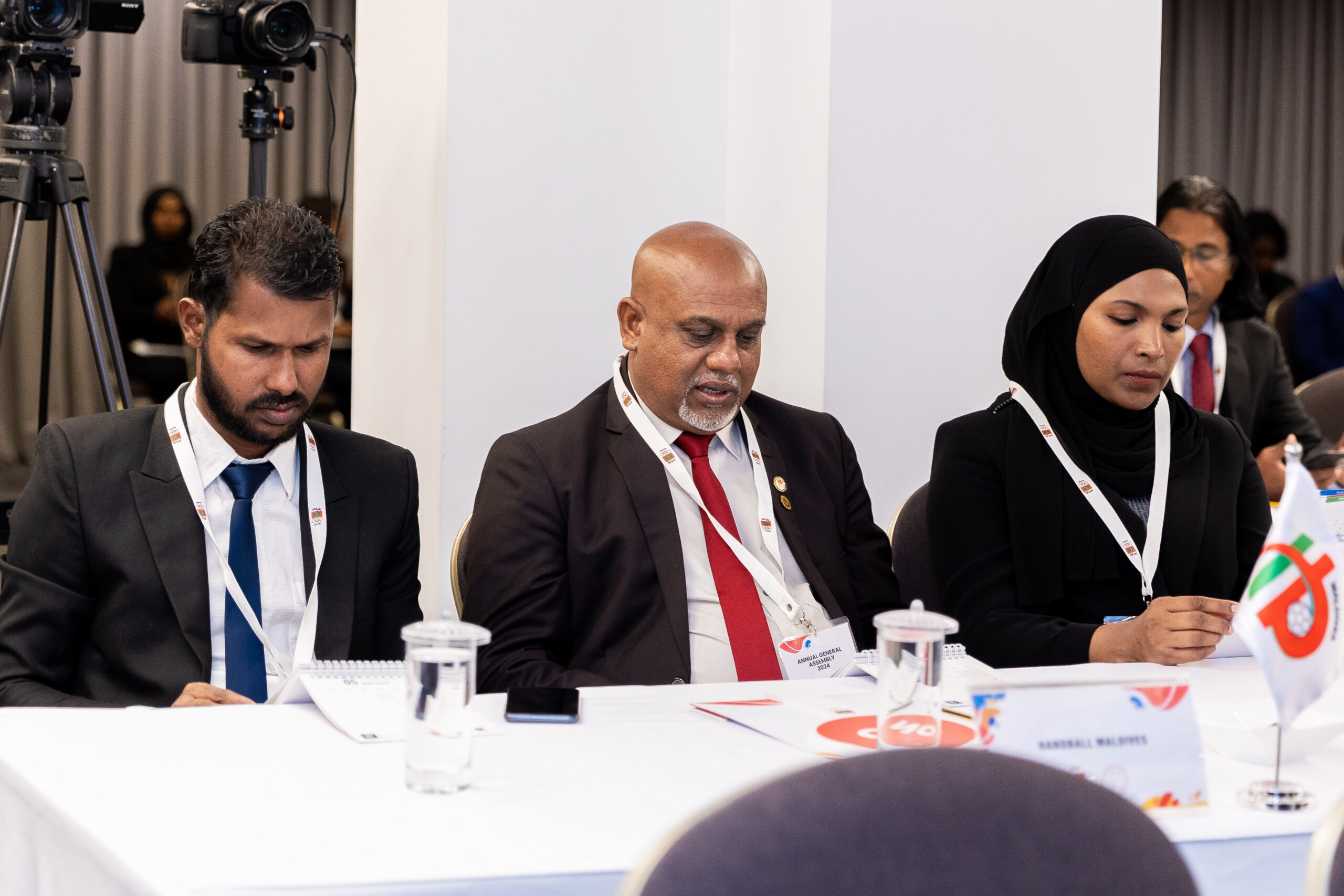
The Handball Association of Maldives is currently conducting a week-long program for the first batch of its Technical Officials Grading Course, a mandatory assessment aimed at evaluating and assigning ranks to Maldivian handball referees and table officials who are currently active in the community.
The course, which started last Wednesday and is set to finish this Wednesday, has a total of 41 technical officials participating – fourteen of whom are female officials and referees.
According to Rafaha Ibrahim, one of the instructors, the course is aimed at those who already hold a certificate issued by Handball Maldives at any point in the past. While a second batch is scheduled to be trained next February, the course has been made mandatory, and failure to participate in either batch could lead to the revocation of their certification.

Unlike entry-level officiating courses, the grading program is designed as a reassessment mechanism rather than an introduction. Its purpose is to standardize competency levels among officials by measuring current knowledge of the handball rules, physical readiness for tournaments, and practical match administration skills, before assigning a nationally recognized ranking or grade.
For referees, successful completion of the course results in the awarding of a national ranking badge, while table officials receive a grade classification that defines their level of competency.
The assessment process was divided into four distinct components; a shuttle run fitness test to assess physical readiness; a video-based examination derived from real match situations; a written rules test; and an evaluation on the accuracy of completing match sheets and compiling statistics – an area particularly relevant to table officials and match administration roles.
Depending on the criteria achieved by the participants, they are to be awarded one of three badge levels: Black, Red, or Silver. The Black badge represents the entry-level national ranking, while Silver stands as the highest classification under this grading framework.
Rafaha and Shizna Rasheed – both of whom are internationally recognized referees – are the primary conductors of the sessions, with additional support provided by senior referees Mohamed Shaneef and Abdullah Sameeh.
By the end of the course, the newly trained batch of handball referees are expected to have improved their interpretation of handball rules, consistency in decision-making, and alignment with regional officiating standards.