 Ali Thameem
The group phase of the World Cup has been a blur of 72 games and 215 goals across 17 days.
Expectedly, the statistics have eclipsed any other tournament in the competition’s 96-year history – given the bloated number of games and participants this edition.
What’s with all the own goals?
Own goals are part of football. A bit of bad luck can occasionally see a defender or goalkeeper turn the ball into their own net, but there has been a notable trend of players conceding own goals during the group stage.
There has been 12 own goals, matching the highest tally in the tournament’s history (12 in 2018). Even adjusting for the expanded 48-team format, the rate in 2026 looks likely to reach unprecedented highs.
The tournament has largely been a success from the footballing side, but the gulf in quality between teams has been notable at times, with a rise in individual errors.
There have been a noticeable number of clumsy defending and erratic goalkeeping. And when you combine that with some of the most elite attacking talents in world football, these sorts of mistakes are a byproduct of the game.
Substitutes have had an impact
Never has a World Cup been more about utilizing your whole squad. It is only the second World Cup since number of substitutions were expanded from three to five.
Not only do teams now benefit from the expansion in substitutions, they also have an expanded 26-man squad (up from 23). On top of that, coaches have been enjoying the opportunity to rotate over the past seventeen days.
And given that there is an extra stage within the knockouts, substitutes were a big thing at group stage. A whopping 43 goals in the group stage were scored by players coming off the bench.
For context, that is more than any full tournament since substitutes were first introduced at the World Cup in 1970.
It is not just about subs scoring, but how much they are impacting the state of the match, and how influential they can be in turning a losing game state into a draw, or a drawing game state into a lead.
There has been 13 substitute goals that move the dial for their team. Thirteen goals by substitutes that changed a losing game into a draw, or goals that gave the lead. By those measures, this number is already more than at the World Cups of 2022 (11 goals) and 2018 (seven goals).
Deniz Undav is the most notable player to influence a match: having been subbed on with Germany 1-0 down against Ivory Coast, his two late goals secured three points. That makes him one of only six players to score two game-state-changing goals as a substitute in a World Cup since 1970.
With the knockout stage upon us, freshness off the bench is likely to be even more important, with sweltering summer conditions allowing head coaches to shuffle the team more often.
Mixed fortunes in front of goal
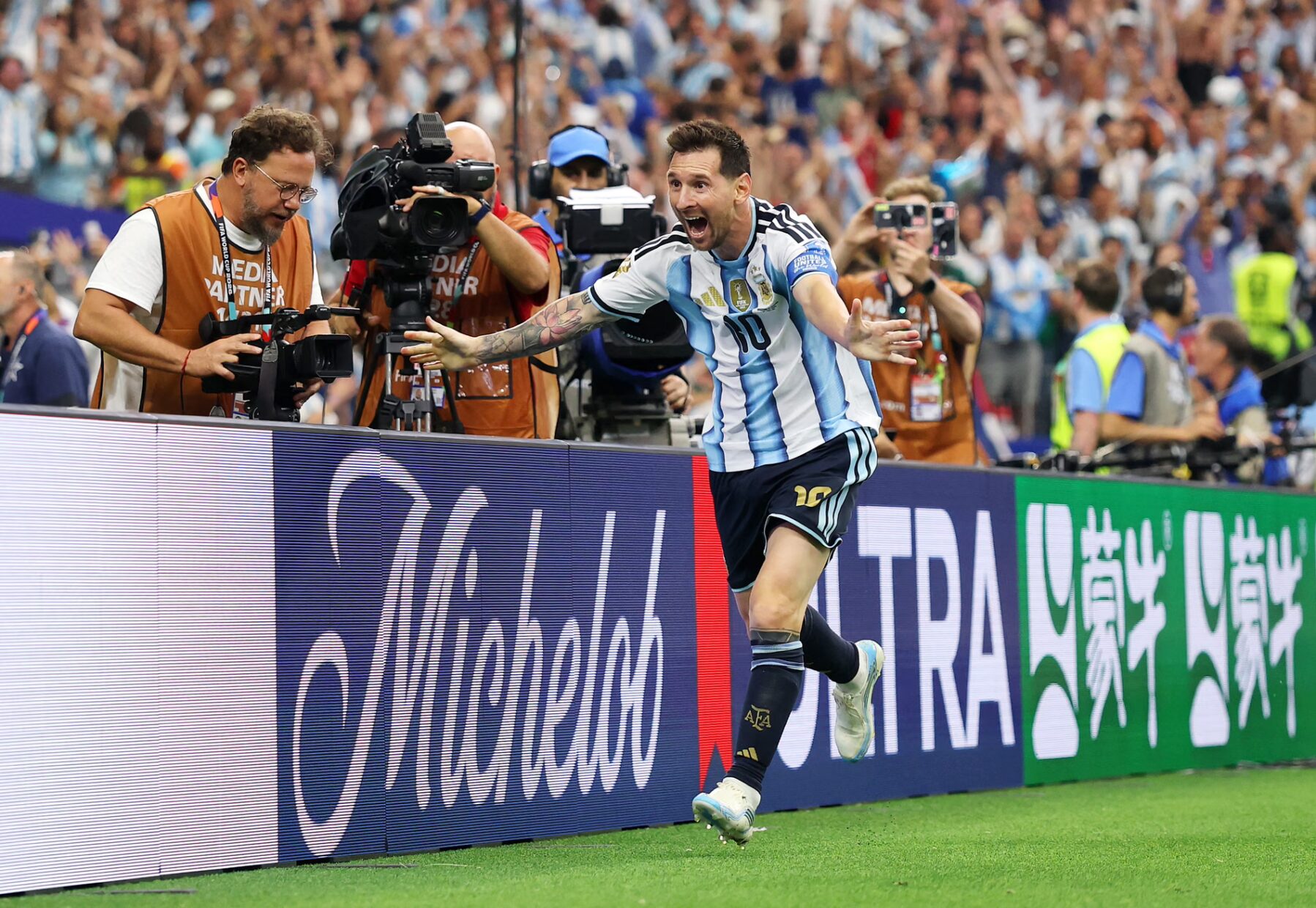
A cursory check on the Golden Boot race shows a certain Lionel Messi leading the pack with six goals. The list makes for satisfying reading, with almost all of the tournament’s star players getting in on the fun. Kylian Mbappe, Vinicius Junior, Erling Haaland, Harry Kane and Cristiano Ronaldo have all scored at least twice in their country’s three group games.
Messi’s two goals against Austria took him above Miroslav Klose as the all-time World Cup goalscorer, while a free kick against Jordan took his tally to 19, but the record might well be broken again before the tournament is over.
Mbappe took his total to 16 World Cup goals with doubles against Senegal and Iraq, meaning he is just three off the record Messi has taken five tournaments to achieve in his own third. At 27, Mbappe has time on his side for future editions, with it looking like a case of when, not if, he will be the outright leader in this metric.
Tap-ins, penalties or driven shots from distance, the Frenchman has done it all on the biggest stage since 2018.
At the other end of the scale, spare a thought for Turkey’s Kenan Yildiz.
Turkey salvaged some pride by beating the United States in their third and last game. Sadly, the nation regarded by many as the Dark Horses of the World up were dumped out of the tournament at the bottom of their group.
And sadly for Yildiz, he was the flag bearer for that wastefulness, as the player with the most shots (14) without scoring across the group stage. Those opportunities were largely mishaps, as Turkey fired blanks in their first two matches.
An abundance of errors
The World Cup can be an intimidating stage, and “though it can catapult lesser-known names into the spotlight, it also brings pressure, the likes of which many players will never have experienced before”, writes Thom Harris and Mark Carey via The Athletic.
Mistakes and misjudgments come with the territory, but there has been a notable uptick in errors leading directly to opposition chances. Across the 72 group-stage games, there were 157 errors leading to the opponent taking shots at goal. That is more errors than in the previous two editions combined.
It all started just nine minutes into the tournament’s opening game, as South Africa’s Sphephelo Sithole was dispossessed on the edge of his own penalty area, allowing Julian Quinones to score for Mexico. Since then, Tunisia’s Ellyes Skhiri and two of Iraq’s three goalkeepers have made costly mistakes leading to goals.
Part of the explanation may lie in the World Cup’s expansion. There has been 30 games at this tournament in which at least 30 FIFA ranking spots separate the two sides, after only 12 in 2022.
Underdog sides have generally attempted to build up methodically with the ball, but any lapses of concentration have been ruthlessly punished by attackers who press hard and counter-attack quickly.
It tallies that among the teams who have made the most errors leading to goals, Tunisia (6), Haiti (3) and Iraq (3) have all faced some of the world’s most terrifying transitional forwards, with Viktor Gyokeres, Haaland and Mbappe all profiting from lapses of concentration by those sides.
Maybe those sky-high figures will slow as the knockout stage gets rolling, but nobody is immune to the pressure of a World Cup.
Who has the most skewed attack?
Teams are increasingly looking to the flanks to move the ball forward. In the 2022 tournament, a record low 16 per cent of all final third entries came via the central channel, a figure that has barely changed.
It comes as more national sides look to dominate possession and territory close to the opposition penalty area. The natural defensive reaction has been to compress the space between midfield and defence, and to block out the centre – the most valuable route to goal – and so affording the other team space out wide.
It is not just possession-dominant sides who are increasingly funnelling their attacks out wide. Several teams are building with three centre-backs, pushing the full-backs high and wide to receive searching passes and switches of play.
Who is the bravest attacker?
According to the statistics from the group stage, the player who logged the most sprints across the opening three games has been Morocco’s Ismael Saibari. He has made 220 sprints over the course of the 270 minutes.
Given the tricky climatic conditions in some cities, one noteworthy metric is looking at which players are intelligently positioning themselves to receive passes in the most dangerous areas of the pitch. In a tournament full of mid- and low blocks, the easy passes are side to side, trying to go around the opposition’s structure rather than through it.
So, a glance at the players who frequently look to receive the ball between the other team’s midfield and defensive line is a good proxy for their on-ball intent and attacking bravery.
The man with the most receptions between the lines is Sweden’s Gyokeres. Typically thought of as the battering ram who runs in behind to stretch the play, the Arsenal striker looks to be playing more of a linking role for his country – dovetailing more with fellow front man Alexander Isak as coach Graham Potter looks to find the best combination in attack.
With more football packed into a World Cup group stage than ever, these insights are an opportunity to reflect and be grateful for some of the relentless entertainment we have witnessed in these opening 17 days.
As we enter the knockout phase, the trends of the tournament are only going to become more entertaining.
Editor’s Note: Some of the statistics and insights referenced in this article were first reported by The Athletic, while others were developed with inspiration from their analysis.