Ali Thameem
Mohamed Mahzoom, or coach Mahey – as known in the football and futsal community – is one of the few UEFA-Certified coaches from the Maldives. Originally from Maradhoo, Addu City, Mahey now resides in the United Kingdom, building on years of coaching experience he gained in coaching football and futsal players in Male’ and beyond. Mahey runs his own academy at home in Maradhoo and uses his social media to teach kids a variety of technical and tactical skills to become professionals.
In our Q&A with Mahey, he talked about the current state of football and futsal in Maldives – and what needs to change, the importance of decentralized football and island-based academies, the role of parents and schools in bringing the best out of kids, and his idea of a thriving future of football and futsal in the Maldives.
Tell us about your journey in coaching, from how it started to becoming a UEFA-certified coach?
My coaching journey didn’t start with badges; it started with curiosity and responsibility. Like many coaches, I began as a player of the national futsal team for 3 years and played in the first division. Those grassroots experiences shaped my philosophy more than anything else. I entered the coaching pathway through national licensing courses aligned with UEFA standards. That’s when the game opened up on a different level. Living in the UK and working in grassroots for over 4 years has helped me become UEFA-certified. This wasn’t just a qualification to me, it was a transformation in thinking and learning the real values.

What is a belief about coaching that you once held strongly but later changed your mind about?
I use to believe that anyone can become a coach. However, after study and coaching others in a different country, it has become apparent this is not necessarily the case. Because, to be a great coach, I believe you need to have played (professionally) to understand things from the players’ perspective.
If you were responsible for running youth development on the national level, how would you make football remain the go-to sport for kids?
To make football remain the go-to sport for kids at a national level, the approach needs to be multi-layered, targeting accessibility, engagement, skill development, and cultural relevance. its about bringing in accessibility and infrastructure to the islands. It is about getting the government involved to build community fields in all Atolls that children can use daily. Every pitch should be well-maintained. Academy training fees should be kept affordable for the working-class family. Schools should ensure that football is a core part of their physical education program with structured leagues and tournaments accessible for all.
When delivering football, it should be fun and engaging. Coaches should focus on enjoyment and creativity over competition at early ages, and develop skills that are age-relevant. You can engage children through asking professional and semi-professional players to coach a session or be an ambassador to inspire youth.
The most important thing is to ensure there are clear progression routes, that holistic development is the core to each program. This means ensuring you are teaching communities about the importance of life skills, nutrition, and mental health support so football becomes a means of personal growth, not just sport.
How can we utilize online platforms to cater to the younger, tech-savvy generation of footballers?
Online platforms must go beyond basic promotion and create immersive, interactive, and value-driven digital experiences. Some ideas include: online skill challenges with leader-boards, weekly digital tournaments, rewards systems (badges, rankings, digital certificates), collaborate with relatable football personalities, not just global superstars.

Is decentralization the right path for Maldivian football development, or does it risk spreading limited resources too thin?
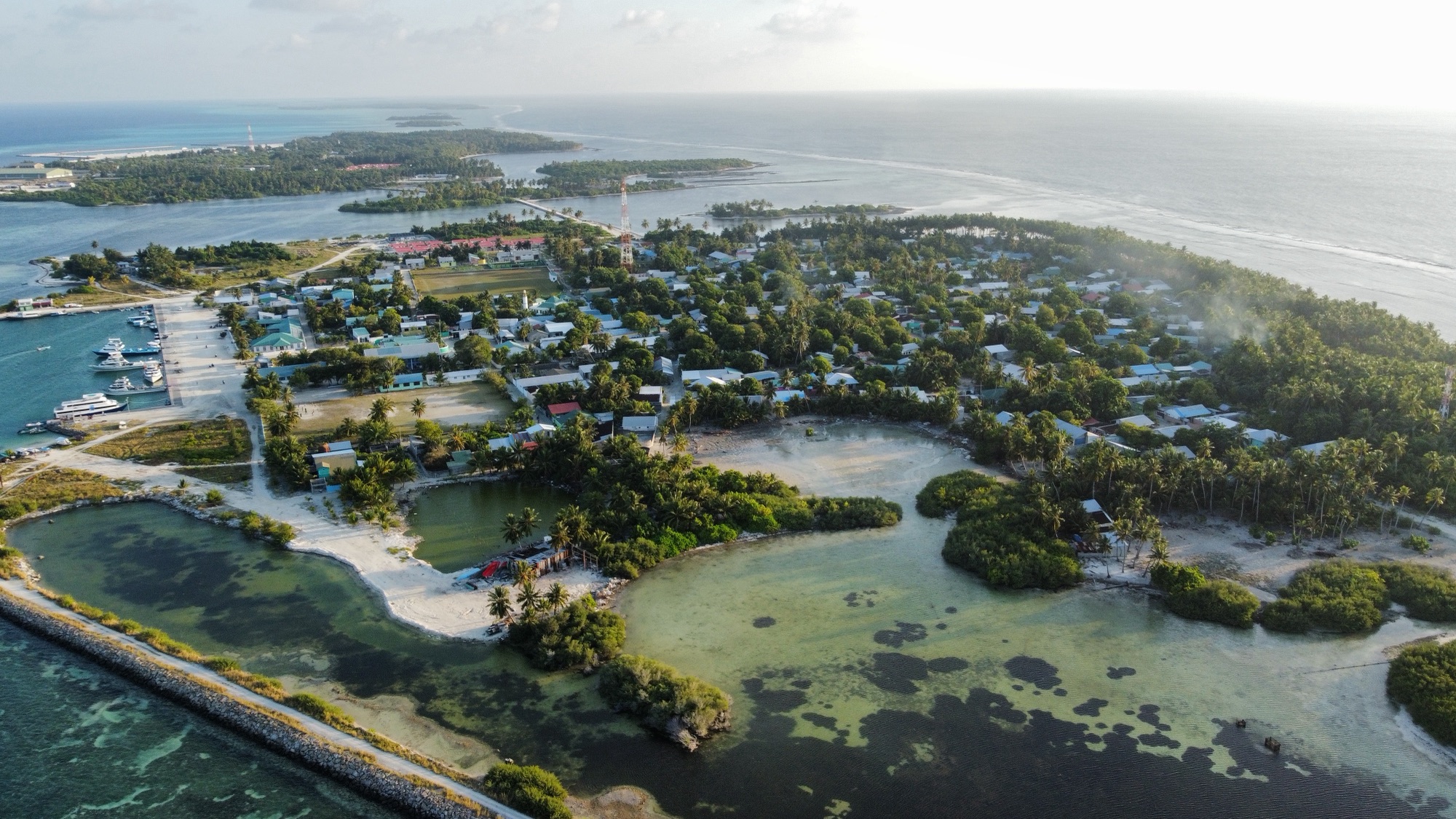
Decentralization in football development can be both an opportunity and a challenge for a country like the Maldives, especially given its unique geography and resource constraints. The main benefit of decentralization is that it allows scouts to reach players who would otherwise go unnoticed on remote islands.
However the risks of decentralization are that if facilities, qualified coaches, and funding are already scarce, decentralization may dilute quality instead of improving outcomes. There are not enough resources if the communities, local councils, and government do not keep investing.
You started an academy in Maradhoo. What was your vision in doing so?
Talented players outside the capital were being overlooked. Starting Mahey Sports Academy in Maradhoo would almost certainly be about closing structural gaps that exist outside Malé in Maldivian football.
The academy closes this by bringing structured development to the player, rather than forcing relocation. Grassroots football in remote areas often relies on volunteers with limited formal training. Scouting visibility and structured long-term development also up-skills local coaches.
My intention has always been to provide opportunities for players and coaches. We are always looking for individuals who love to work hard and enjoy the game; this includes both male and female coaches. Mahey Sports Academy also provides study opportunities with local and international tutors. We aim to give the best start in life for youngsters and aim to grow the love of the game through positive role modelling.
By establishing it in Maradhoo, I am not just building future football stars; I am playing my part in the decentralization of Maldivian football.
When you look at a 10-year-old in training today, what signs tell you he or she has a future? And what signs tell you they simply love the game?
We shouldn’t just be looking for “talent.” We should be looking for indicators of potential and passion. Game intelligence at 10 years old is often a stronger predictor than physical ability. You can always tell who loves the game, as they don’t ask when training ends. An important reality is that not every child who loves the game will become elite; the ones who go furthest usually have both game intelligence and resilience.
My job is not to label them, but to create an environment where both potential and passion can grow.
Which coaches influenced your thinking the most, and why? (Tactical, psychological, or leadership-wise?)
Every coach develops their own identity over time; my philosophy has been shaped by studying coaches who excel tactically, psychologically, and as leaders.
Coach Suzain, Dunga, and Nizaambe have influenced me most, with the importance of preparation, and how to respect the game and others. My goal is to implement what I have learned and enhance it further.
From the outside perspective, what is one structural weakness in Maldivian football that we don’t talk about enough?
One thing is the absence of a unified long-term player development framework, and the fact that most opportunities come within Male. The islands outside the capital rarely get exposure, and coaching opportunities become limited. This means players with potential remain undiscovered.
If financial support is not there, then many clubs and academies outside of Male’ could not sustain themselves.
Maldives recently won the SAFF Futsal Championship. What are your thoughts on the victory? And do we have the potential and resources to compete in the Asian or International level?
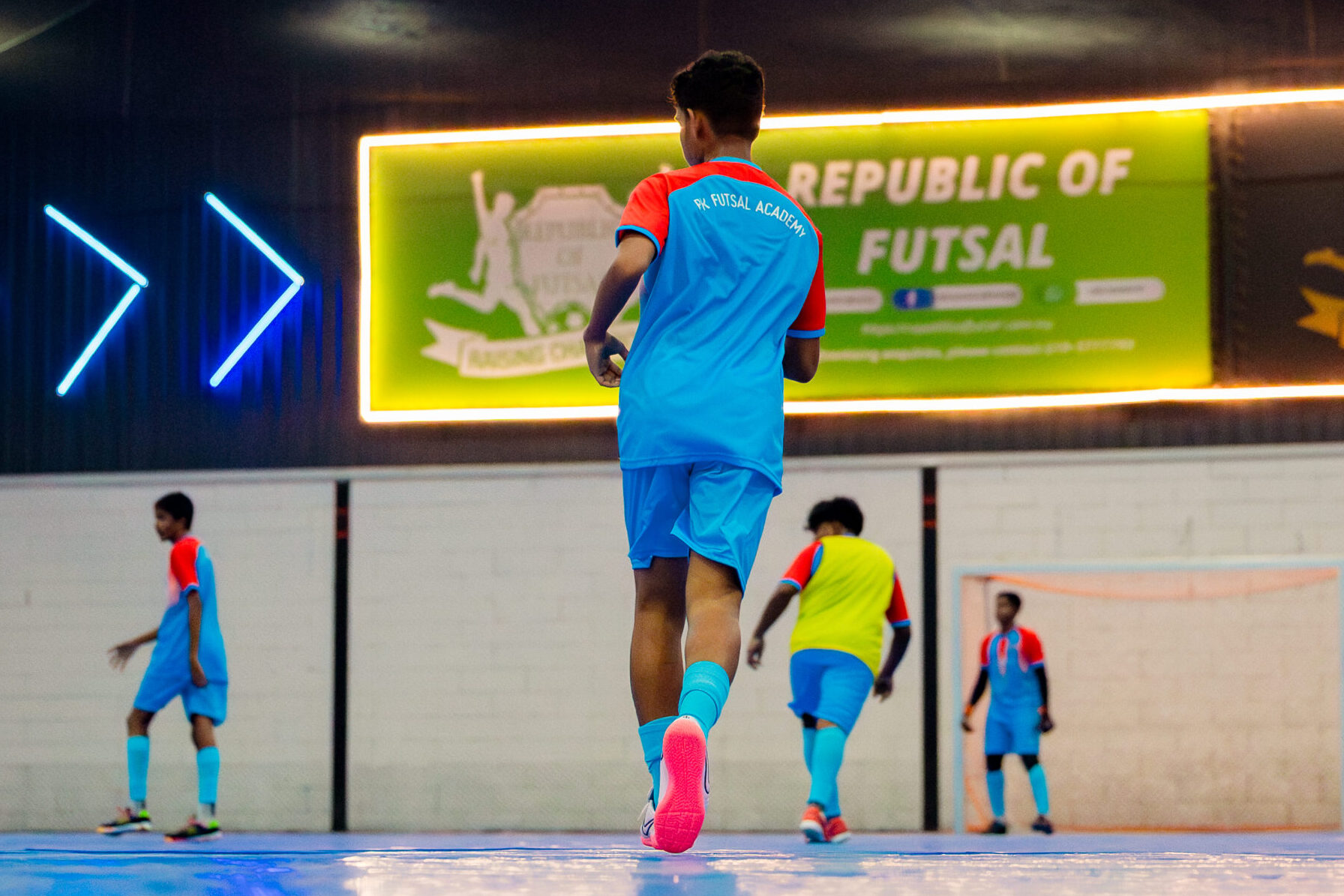
I was fortunate to play and be a part of the national futsal team for 3 years. SAFF Futsal Championship victory for the Maldives is a huge milestone for sport in our country, as well as the futsal community of the Maldives. Without extensive infrastructure and having a dedicated indoor futsal facility/ training pitch, the team competed superbly. The trophy showed the government and association that they needed to step up their game, just as the team did.
Moving from Asia to the international level requires much more depth in several key areas like Infrastructure and youth talent pathways. We need to invest heavily to ensure we are continuing to perform at this new level.
Should futsal be treated as its own elite pathway, or as a technical foundation for 11-a-side football?
Countries like Brazil, Spain, France, and now Germany have long benefited from futsal as a technical incubator for 11-a-side. However, they have ensured that there is a structure that allows players to explore other opportunities.
Futsal can dramatically raise the technical level of 11-a-side footballers. The way to do this is by generating geographic dispersion and ensuring large-pitch opportunities are used correctly.
I would say both futsal and football must have their own pathway.
What is one effective reform the Dhivehi Premier League could implement next season, or in the next four or five years?
One reform that could genuinely transform the Dhivehi Premier League in the coming years is introducing a structured U-19, U-21, and U-23 league. This structure should include the association and variety of clubs. Each club should ensure each player has a minimum number of minutes played across the season, as well as ensuring they participate in other tournaments.
There should be league funding offered or financial incentives for all clubs that successfully promote academy players to the first team.
What are the biggest misconceptions parents have about youth football development?
Parents expect the coach to do everything. However, it should be a collaborative approach where parents and coaches work together to achieve the best outcomes for each child.
Parents often assume that because their child is the best 8-year-old in the group, they will become the best 18-year-old in the group. But this is not necessarily the case. The reality is that early physical maturity is often mistaken for ‘talent’. Late bloomers frequently surpass early standouts, and many players are then overlooked in youth systems. Parents should also have time to review and meet with coaches to have open discussions about their child, so there is no misconception.
Ten years from now, where do you see Maldivian football? What legacy do you want to leave, in the UK or back home?
I would like to see the Maldives competing at an international stage more often. I want Maldivian football to be recognized as structured, competitive, and respected in Asia.
For the Maldives, it would be great to see talented children given opportunities within local islands so they do not necessarily have to relocate to the capital, allowing them to reach their full potential on the football field while continuing their studies in their home island.
It is important to mentor local coaches to a higher standard. Monthly webinars, opportunities for coaches to meet and network with other coaches would be a good start.
We need to ensure mentorship and knowledge sharing are happening regularly. We need to work with local schools to educate both staff and parents on how to enhance the progression of each child.
Within our communities, we need to continue to promote both futsal and 11-a-side football as complementary pathways.
As for the UK, I would like to ensure that the development programs and environments where I work continue to have measurable and sustainable growth. I would like to be a contributing factor to a culture where coaching is collaborative and take this experience back to the Maldives one day.