Ali Thameem

Mariyam Laisa Abdhul Rasheed was eleven when she discovered chess.
It was late 2016. The concept of a professional female chess player was still unfamiliar, if not entirely foreign, to much of the Maldivian public.
“I was experimenting with different sports at that time, until I came across chess. And I was naturally just drawn to it and became good at it, so I thought, yeah, this is my thing”.
It might have been “just a hobby” for her at first. There was not much of a pathway to becoming a professional chess player at the time, and there were even fewer mentors to look up to for guidance. So, for the time being, a hobby was all it remained.
But she enjoyed it. Like many who discover chess at a young age, Laisa found something in the game that captivates her; something that is difficult to put into words.
At the age of 14, three years after Laisa discovered chess, she was selected for the national team. She has been representing the Maldives in international tournaments ever since.
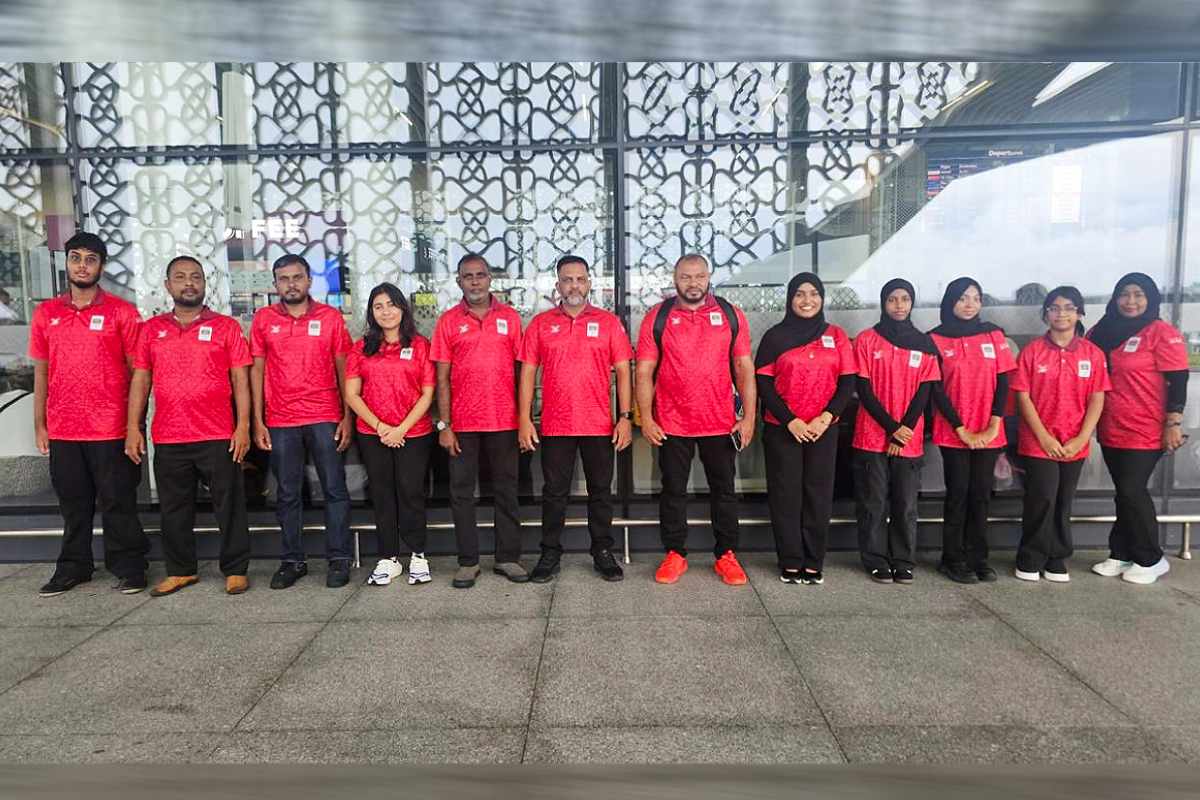
Last month, at the 46th Chess Olympiad held in Uzbekistan, the women’s national team won a gold medal for the Maldives, topping their category’s leaderboard against 36 other countries. It was also a remarkable individual achievement for two of the Maldivian athletes who earned the FIDE-recognized title, Woman Candidate Master.
One of the two players was the prodigy, Eena Abdhulla Hassan. The other was Laisa. Each scored a total of 5.5 points in 11 rounds, crossing the threshold for earning the WCM title.
Tactics and Mindset Towards Improving
As with any ambitious chess player, most of Laisa’s free time goes towards improving her game. In the evenings and at night, she watches instructional videos on YouTube, reviews her games, solves puzzles, and reads chess books. Ahead of the Olympiad, for instance, she had dedicated three or four hours each day to improving her game – much as she would for any other tournament.
For Laisa, reviewing games takes the highest priority. When it comes to game review, Laisa says she is particularly interested in the games she lost. As painful as it is to go through those mistakes, understanding where she went wrong, she says, gives her a better chance of avoiding the same mistake in the future.
As for handling the tone of her games, Laisa says she wants to be the one to dictate the tempo or, if she finds herself in a losing position, at least keep creating problems for her opponent.
As White, Laisa prefers to begin with 1.e4. She mostly used to play variations of the Italian Game, but the Scotch Game has now become her favourite opening (1. e4 e5 2. Nf3 Nc6 3. d4).
With Black, she plays the Sicilian Defence and prefers the Dragon Variation. Her preference for, and her strength in, the Sicilian helped her immensely in two of the biggest tournaments she played this year: the Maldives National Championship and the Chess Olympiad in Uzbekistan.
The Olympiad, and Becoming a Woman Candidate Master
Laisa was just 16 when she first represented the Maldives at an Olympiad: the 44th edition held in Chennai, India.
She retained her place in the national team two years later, but missed the 45th Olympiad in Budapest, Hungary, in 2024 because she was sitting for her A-Levels.
Although she stepped away from chess for a while, Laisa returned just as strong. She won third place in the national championships held earlier this year: a bronze in the women’s category, just half a point behind Nihaya Ahmed and Fathimath Zoya Hassan Saeed.
Laisa believes she might have performed better had she remained consistent, but she cannot say exactly how, or to what extent, the break from chess affected her performance.
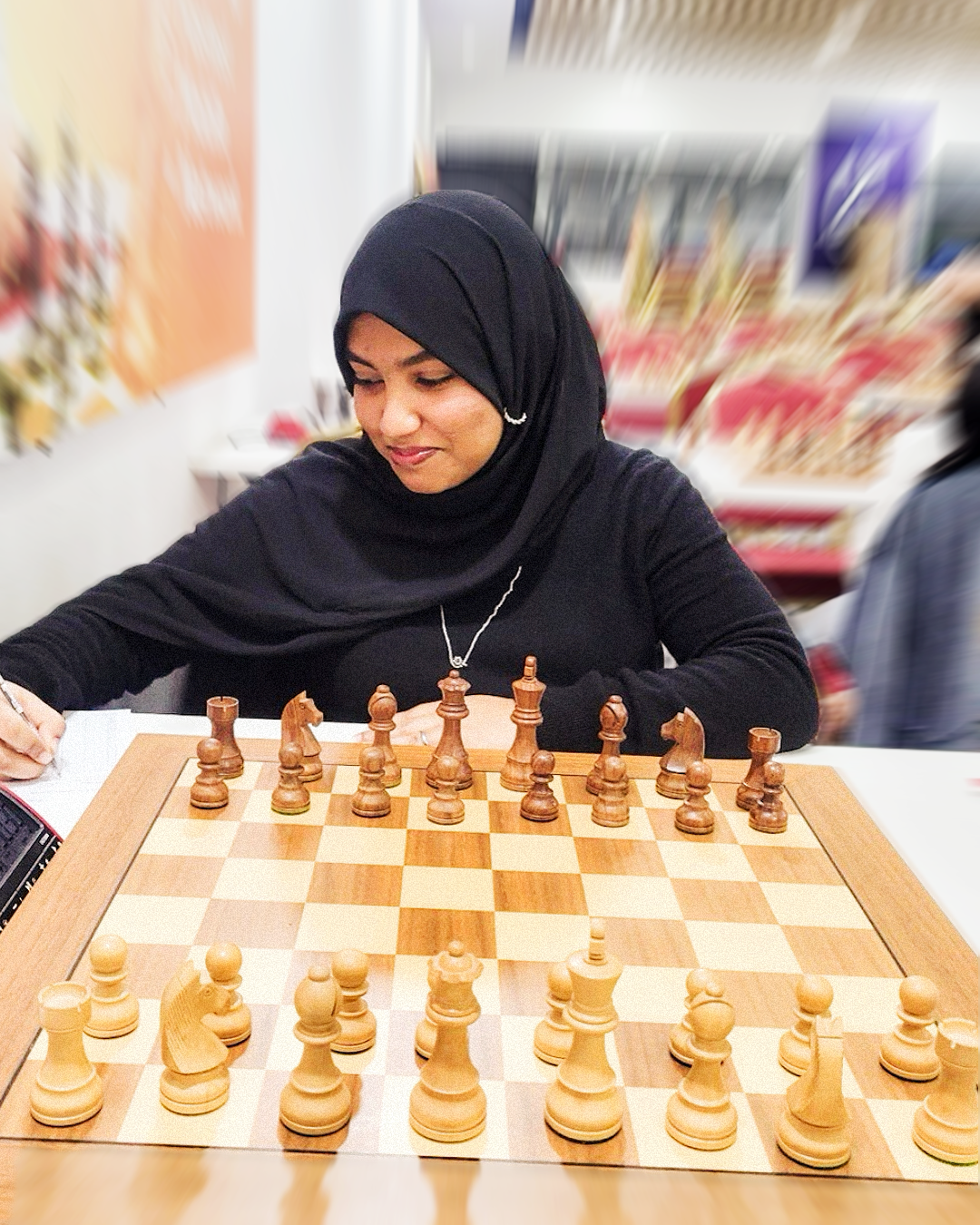
Four years after her first Olympiad in Chennai, Laisa returned as a more experienced player and took on Board 2 in Uzbekistan this September, as Maldives played in the ‘E’ Category.
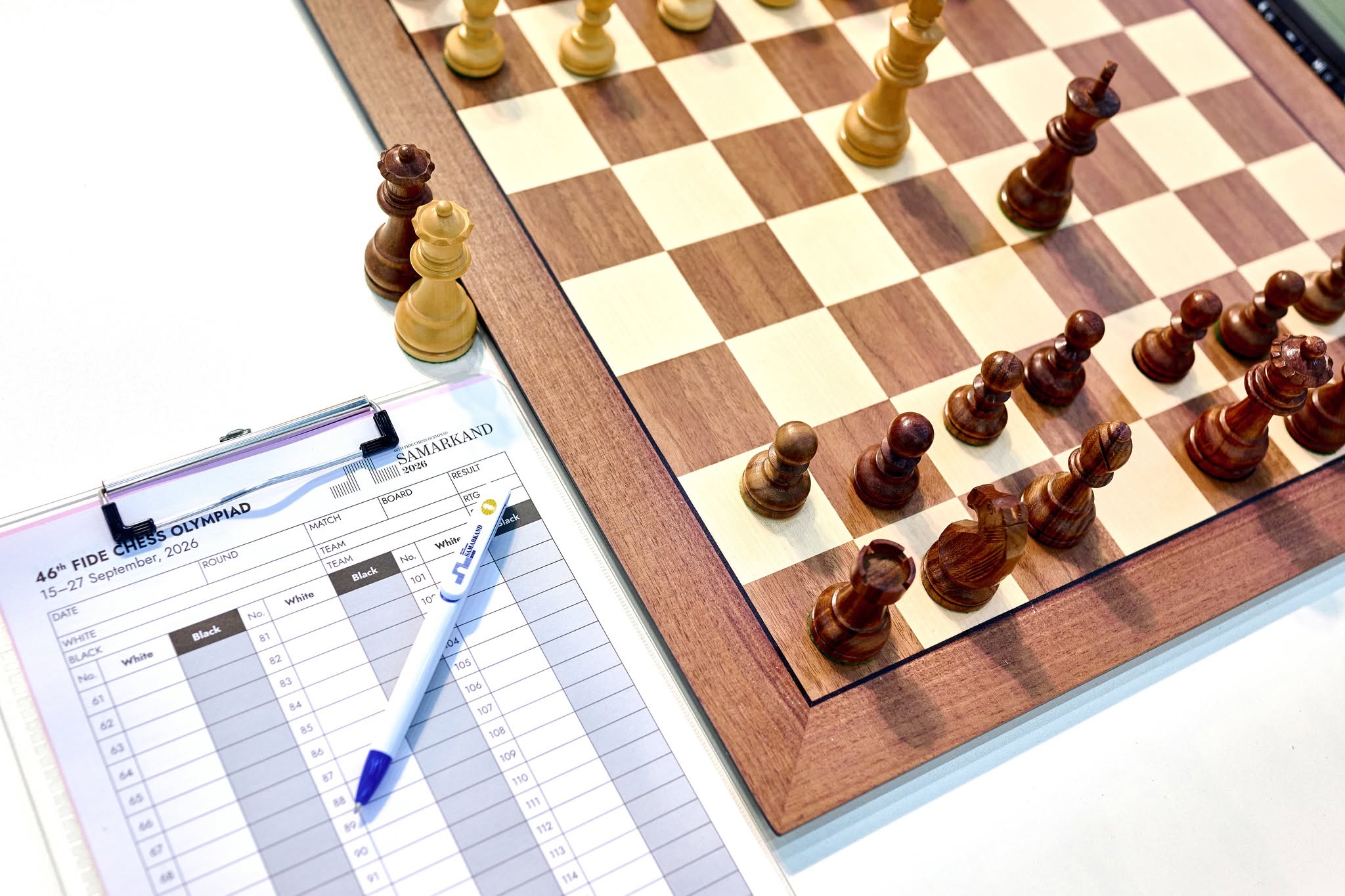
Illustrated below are the final positions in Laisa’s games (Rounds 3,4,5,8,9 and 10) at the Olympiad where she either won or drew. Laisa contributed 5.5 points (five wins and a draw) in Maldives’ road to winning the gold medal at the Olympiad this September.


Reflecting on the Olympiad, she says, “I did pretty great. I was playing on board 2. Secured good points and contributed a lot to the team and our win this time. So really happy about it, and for the (WCM) title too”.

These achievements of hers, both individual and as part of the national team, were achieved in almost improbable circumstances. Speaking on the lack of professional chess coaching in the Maldives, Laisa said that the coach who was with the national team was only hired for the Olympiad. “We (national team players) did not take practice classes (in the lead-up to the Olympiad). Nothing like that”.
Tradeoffs, Sacrifices, and the Price of Achieving Dreams
Almost every athlete, at some point, gets questioned about the worth of their ambitions; whether the amount of time spent on practice and learning is really a price to pay; time they could otherwise spend on schoolwork or their job.
But this transactional attitude towards the sport is especially burdensome for professional chess players like Laisa, who need to spend a great deal of their time on crafting their skills.
Growing up, she remembers feeling frustrated by how some dismissed her as a “delusional young girl”. Some expected her to make a choice between school and chess; “They are like, if you’re studying, then just study. Or if you’re playing, just play, don’t study”, she says.
But Laisa refuses to accept this mutually exclusive mindset.
“My whole purpose of existence is to prove that wrong (the belief that one can be great at either one or the other… studies, or chess). Hey look, why can’t we do both honestly, I’m doing it. A lot of other people are doing it. Like, sports ga I’d be considered a pro athlete, right?”
She was awarded the Top Ten prize in both O-Levels and in A-Levels, during the same years of her life when she was starting to take chess more and more seriously. She was nominated for Athlete of the Year in chess in the same year as she completed her A-Levels. “And I’m studying med (MBBS) now, so if I can go play Olympiad and Nationals in person while studying medicine, I think I’m proving my point”.
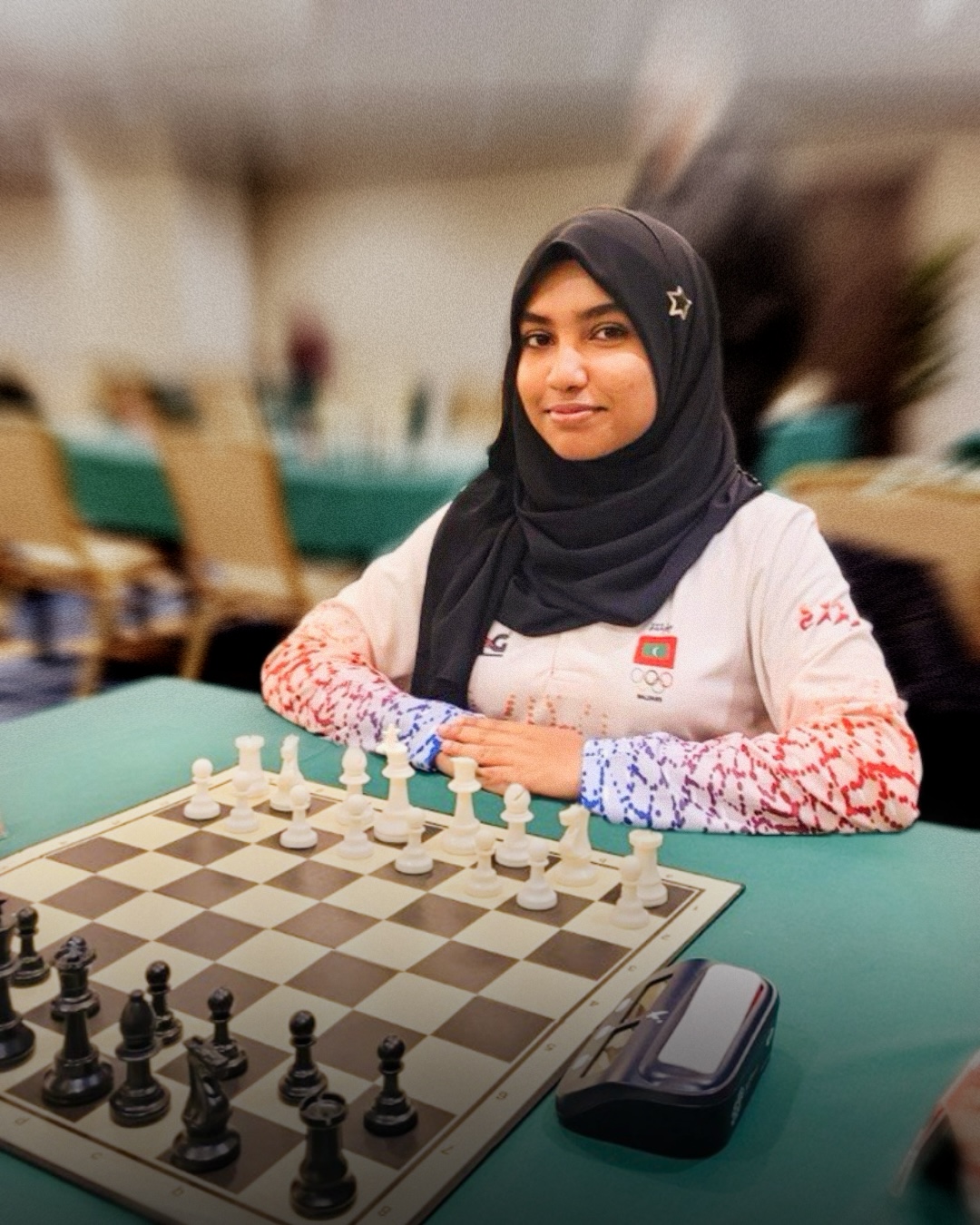
Laisa’s conviction in keeping balance in these aspects of her life might sound counterintuitive to some. After all, unlike other sports which are mostly physical, chess demands far more of an athlete’s time should they aim to be extraordinary.
When asked about the difference between chess and sports such as football and basketball, Laisa points out that, although chess is mostly a cognitive sport, it takes a physical toll, even if it is less obvious. “There is a physical aspect, cause even if they don’t see it. Your body needs to be physically fit to keep up with the huge mental toll it has on you”. But she also believes “every sport is differently difficult in its unique way.”
Her understanding of chess, and the price one must pay for greatness, has implications for one of the big dilemmas of the game: the Paul Morphy quote, “The ability to play chess well is the sign of a wasted life”.
She disagrees with this, to a certain extent: “One person’s idea of the meaning of an accomplished life is very different from another’s. Me personally, if you’re good at something, that’s a great accomplishment. Not a waste. But if you’re, like, sucked into it and missing out on all the other things in life, then yes, that is a waste of life.”
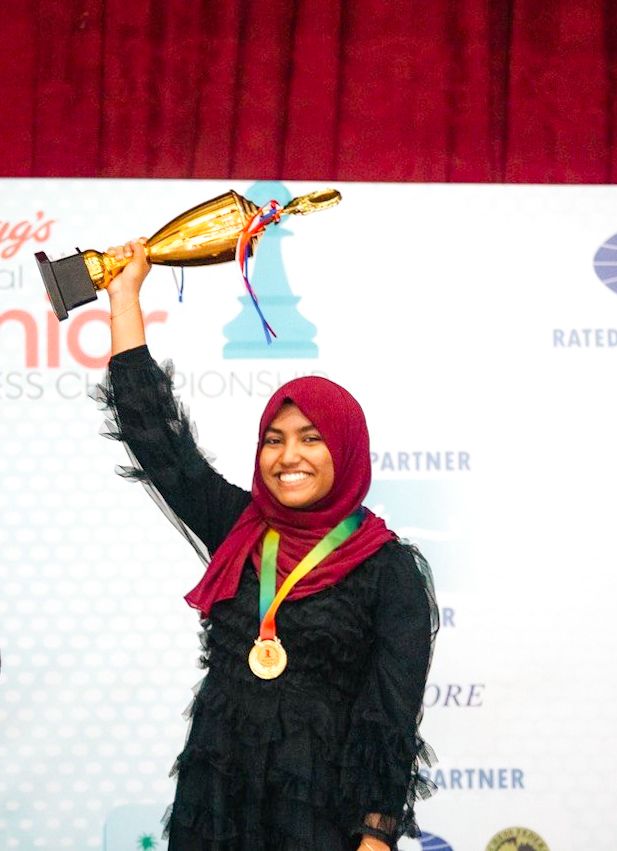
“You can be a master of some too while trying everything. Sure, you might not be ‘The King’ of it or whatever, but you can still master it.”
And as much as she draws inspiration from the great female chess players in history, she is wary of idolizing them. To witness what it costs to become, say, a Grandmaster, to see how much of their lives were consumed by chess – Laisa regards those as cautionary tales.
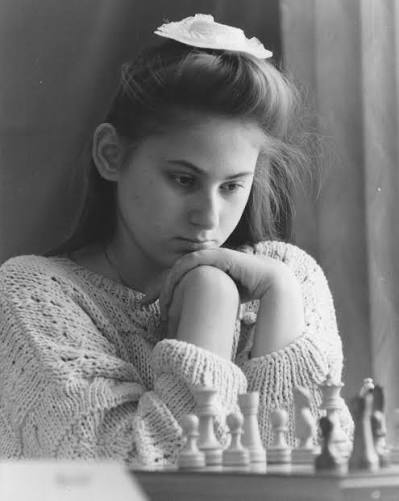
“You know, like, when I see the Polgar Sisters and people like that, who just played chess their whole life and they have just nothing else. It’s really sad, because I think everyone deserves to experience different things that life has to offer”.
Every ambitious move, in life as in chess, is a sacrifice; a gambit. There are hardly any great athletes who have not sacrificed at least one aspect of their lives to the sport of their choosing. In that regard, Laisa is no exception.
But to have earned the accolades that Laisa has – to have been named a Woman Candidate Master by FIDE, for instance – that, in and of itself, is exceptional. But then again, the WCM title, although praiseworthy, is merely a by-product of the huge role she played in the Maldives winning gold at the biggest chess team event in the world.